
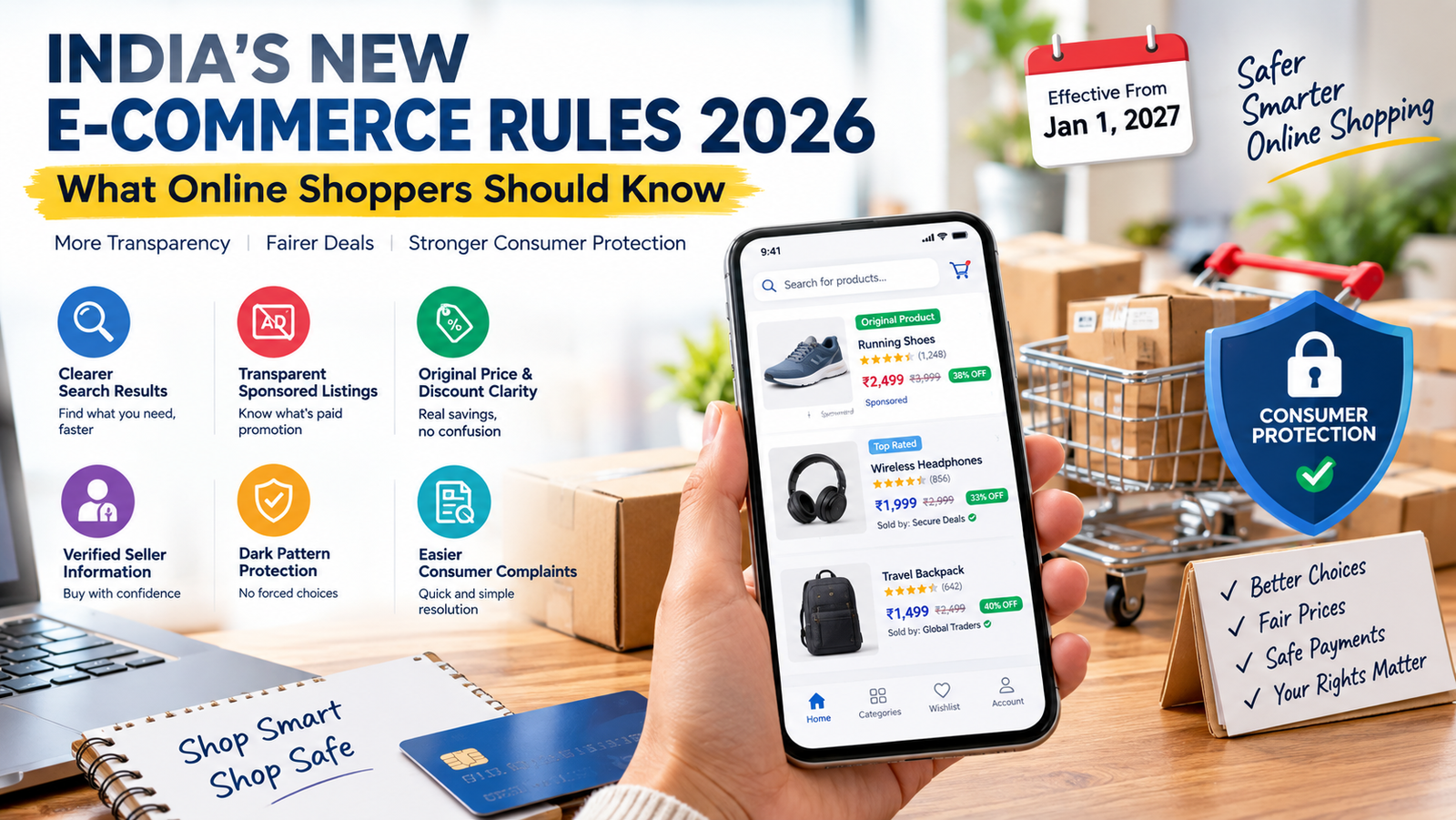
Online shopping in India is set to see several important changes after the government amended the Consumer Protection (E-Commerce) Rules, 2020.
The new rules introduce additional requirements around search results, sponsored listings, discounts, seller information, dark patterns, consumer complaints and other aspects of online shopping. The changes are scheduled to take effect from January 1, 2027.
For shoppers, the changes could mean clearer information about products, prices and promotions. For e-commerce platforms and sellers, the rules introduce additional responsibilities around transparency and consumer protection.
What Are India's New E-Commerce Rules?
India has amended its existing Consumer Protection (E-Commerce) Rules to strengthen consumer protection in online marketplaces and digital commerce.
The changes address several areas where shoppers may have difficulty understanding how products are presented, how discounts are calculated, which listings are promoted and how complaints are handled.
The new requirements are intended to make important information more transparent for consumers.
When Will the New Rules Take Effect?
The amended e-commerce rules are scheduled to take effect on January 1, 2027.
This means online shopping platforms and sellers have time to prepare for the additional requirements before the rules become effective.
Until then, shoppers should continue following normal online-shopping safety practices and check the information provided by individual platforms.
What Could Change for Online Shoppers?
The amended rules cover several areas that can directly affect how people discover and purchase products online.
1. Clearer Search Results
E-commerce platforms will face additional requirements concerning how products are displayed in search results.
The objective is to reduce situations where search results could mislead consumers or make less relevant products appear more prominent without adequate transparency.
For shoppers, this could make it easier to understand why particular products appear near the top of a search page.
2. More Transparency for Sponsored Listings
Sponsored product placements are common on shopping websites and apps.
The new rules require sponsored listings to be clearly and prominently disclosed so consumers can distinguish paid promotional placements from ordinary search results.
This distinction is useful because a product appearing prominently in search results does not necessarily mean it is the most relevant product for a shopper's search.
3. More Clarity Around Discounts
Online stores frequently advertise discounts using original prices, sale prices and percentage reductions.
The amended rules introduce requirements intended to improve transparency around price reductions and discounts.
Shoppers should still compare prices across different sellers before assuming that a displayed discount represents the best available price.
4. Action Against Dark Patterns
Dark patterns are user-interface techniques that can influence people into making choices they may not have intended to make.
Examples can include confusing buttons, difficult cancellation processes, misleading prompts or interfaces that make one choice significantly easier than another.
The updated e-commerce framework strengthens consumer protection in this area.
5. Better Seller Information
Consumers often want to know who is actually selling a product before placing an order.
The amended rules include requirements related to seller information, helping consumers get clearer information about sellers operating through online marketplaces.
This can be particularly useful when multiple sellers offer the same product at different prices.
6. Stronger Consumer Complaint Processes
Consumer complaints are another important part of the new framework.
E-commerce platforms will have additional responsibilities related to consumer grievance handling and participation in the consumer-protection system.
The National Consumer Helpline received a large number of complaints related to e-commerce during 2025, highlighting the importance of effective complaint and resolution mechanisms.
Why Do These Changes Matter?
Online shopping has become an important part of everyday life in India. Consumers can compare thousands of products, prices and sellers without visiting a physical store.
However, the large amount of information presented on shopping platforms can also make it difficult to distinguish between organic search results, advertisements, genuine discounts and promotional messages.
The updated rules focus on making these areas more transparent.
What Are Dark Patterns in Online Shopping?
Dark patterns are design practices that can steer users toward particular actions through the way an online interface is designed.
For example, a website could make a subscription easy to start but difficult to cancel, or use confusing wording around an additional purchase.
Consumers should pay attention to:
- Pre-selected options
- Unexpected additional charges
- Confusing subscription offers
- Difficult cancellation processes
- Urgency messages that may encourage rushed decisions
- Unclear checkout information
The updated e-commerce rules strengthen the regulatory focus on such practices.
How Shoppers Can Stay Safe Online
The new rules can improve transparency, but consumers should still take responsibility for checking purchases before completing an order.
Check the Seller
Before buying an expensive product, review the seller's information, ratings and customer feedback where available.
Compare Prices
Do not rely only on a large discount percentage. Compare the final selling price across multiple sellers and platforms.
Read the Product Description
Check the product specifications, size, model number, warranty information and return conditions before purchasing.
Review the Final Checkout Price
Before payment, check whether shipping fees, taxes or other charges have been added to the advertised price.
Look for Sponsored Labels
When browsing search results, pay attention to labels indicating that a product placement is sponsored or promoted.
Keep Order Records
Save invoices, order confirmations and important communications until the return or warranty period has ended.
What Businesses and E-Commerce Platforms Need to Know
The amended rules are not only relevant to shoppers. E-commerce companies, marketplaces and sellers will also need to review their online practices.
Areas that may require attention include:
- Search-result presentation
- Sponsored product disclosures
- Discount and price information
- Seller details
- Consumer grievance procedures
- Website and app interface design
- Dark-pattern compliance
- Consumer complaint records
Businesses should review the final legal requirements and seek professional advice where necessary before the rules become effective.
Will Online Shopping Become More Expensive?
The rule changes themselves do not mean that all online products will automatically become more expensive.
The main focus is consumer protection, transparency and platform responsibilities.
However, individual businesses may make operational changes as they adapt their websites, marketplace systems and compliance processes. The effect on prices will depend on how individual businesses respond.
Will Every Online Store Change?
The rules apply to e-commerce entities covered by the relevant consumer-protection framework.
The exact compliance requirements can vary depending on the type of business and how its online marketplace or commerce platform operates.
Consumers should therefore expect implementation details to vary between different shopping platforms.
What Should Shoppers Do Before January 2027?
There is no need for shoppers to stop using online shopping platforms because of the new rules.
Instead, consumers can use the period before implementation to develop better shopping habits:
- Compare prices before buying.
- Check the seller and product information.
- Review the complete checkout price.
- Read return and refund conditions.
- Look for sponsored or promoted labels.
- Avoid rushing because of countdown timers or urgent messages.
- Keep invoices and order confirmations.
- Use official complaint channels when problems occur.
How the Rules Could Change the Online Shopping Experience
| Area | What Shoppers May See |
|---|---|
| Search results | Greater transparency around product ranking and presentation |
| Sponsored listings | Clearer identification of paid promotions |
| Discounts | More transparency around price reductions |
| Seller information | Clearer information about marketplace sellers |
| Dark patterns | Additional consumer protection against manipulative interface practices |
| Complaints | Stronger requirements around grievance handling |
Frequently Asked Questions
What are India's new e-commerce rules in 2026?
India has amended its Consumer Protection (E-Commerce) Rules, introducing additional requirements covering areas such as search results, sponsored listings, discounts, seller information, dark patterns and consumer complaints.
When will the new e-commerce rules start?
The amended rules are scheduled to take effect from January 1, 2027.
Will the rules affect online shoppers?
Yes. Several provisions concern how products, prices, advertisements and seller information are presented to consumers online.
What are sponsored listings?
Sponsored listings are product placements or search results promoted through paid advertising. The amended rules include requirements for clearer disclosure of sponsored listings.
What are dark patterns?
Dark patterns are interface or design practices that can manipulate or steer users toward particular choices. Consumer-protection rules address certain practices that can mislead or unfairly influence shoppers.
Should I stop shopping online because of the new rules?
No. The rules are intended to strengthen consumer protection and transparency. Shoppers should continue using normal online-safety practices and check product, seller, price and return information before purchasing.
Final Thoughts
India's amended e-commerce rules introduce important changes for the country's growing online-shopping market.
For consumers, the most noticeable areas may include clearer sponsored listings, greater transparency around discounts and search results, better seller information and stronger protection against certain dark patterns.
The rules are scheduled to take effect on January 1, 2027, giving e-commerce businesses time to prepare their systems and processes.
Until then, shoppers can benefit from developing simple habits such as comparing prices, checking sellers, reviewing the final checkout amount and reading return policies before placing an order.
Sources
- Indian Express – How new rules are set to change your online shopping experience
- Retail Asia – India tightens e-commerce rules with new consumer safeguards
- National Consumer Helpline
Disclaimer: This article is for general informational purposes and is not legal advice. The implementation and interpretation of the amended e-commerce rules may depend on official notifications and applicable requirements. Consumers and businesses should refer to official government information for the latest requirements.