
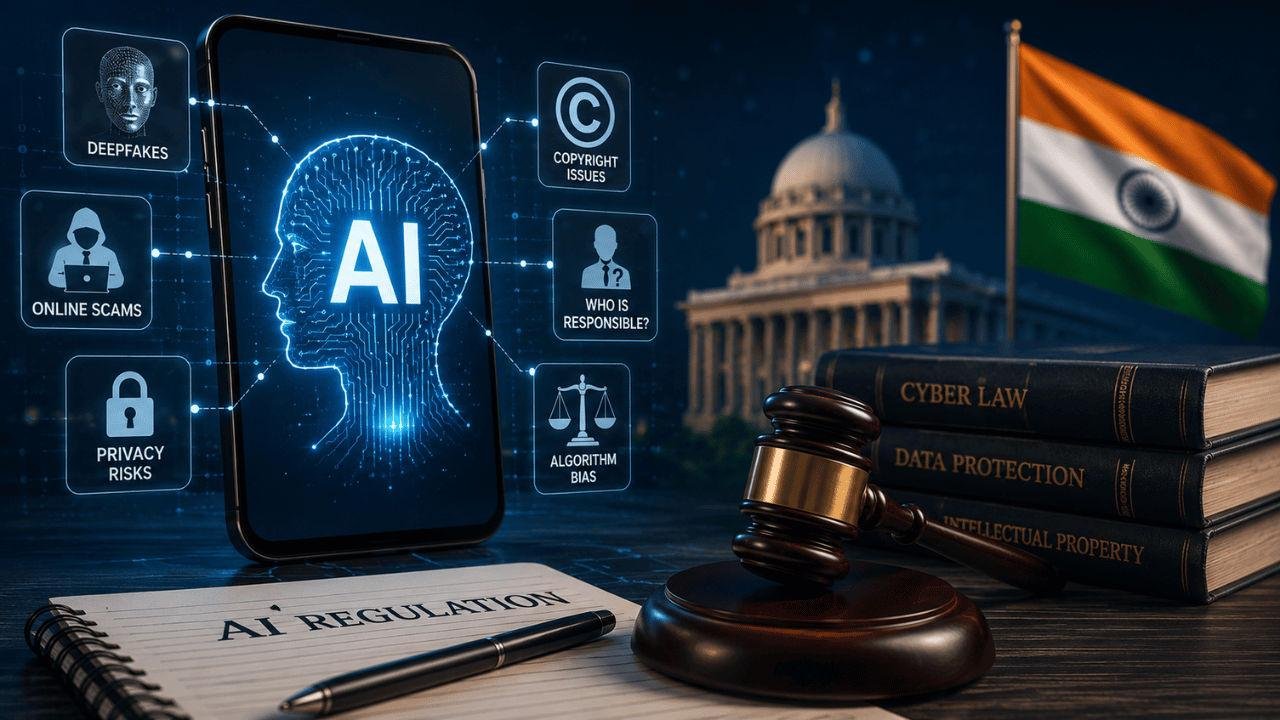
India AI regulation 2026 is becoming an important topic as the government considers a more structured approach to artificial intelligence safety, deepfakes and AI-generated misinformation. The proposed consultation could help shape how AI developers, businesses, digital platforms and everyday users manage emerging risks.
According to a report published by The Indian Express on October 9, 2026, the government plans to release an AI-regulation consultation paper within a month. Reported areas of discussion include AI safety, inclusivity, synthetic content and risks associated with autonomous AI systems. The proposals should not be treated as final rules until official details are published.
What Is Changing in India's AI Regulation Approach?
Artificial intelligence is increasingly used for writing, customer support, software development, image generation, voice cloning and automated decision-making. These applications create opportunities, but they also raise questions about accountability, privacy, transparency and misuse.
India's planned consultation could help examine how existing laws and potential additional safeguards should address these challenges. For a broader look at recent AI developments, read our guide to Google Gemini in Chrome in India in 2026.
Why Is India Considering New AI Rules?
Several developments have made AI governance more urgent:
- Deepfakes: AI can create realistic but fabricated videos, images and audio recordings of real people.
- Misinformation: Synthetic content can spread false claims quickly and make verification more difficult.
- Privacy: AI tools may process personal, business or confidential information.
- Autonomous AI agents: Systems that plan and perform multiple tasks can create risks when they act without appropriate supervision.
- Accountability: Businesses and users need clarity about responsibility when AI systems cause harm or produce misleading results.
Businesses exploring automated workflows can also read our guide to AI agents in 2026, which explains how AI systems can perform multi-step tasks.
Deepfakes and AI-Generated Content
Deepfakes are among the most visible risks associated with generative AI. They can imitate a person's face or voice and make fabricated material appear authentic.
Potential misuse includes financial scams, impersonation, misleading political content, harassment and fraudulent customer-service calls. Voice cloning may also be used to imitate a family member or company executive in an attempt to obtain money or sensitive information.
Possible safeguards include clearer disclosure of synthetic content, effective reporting mechanisms, stronger identity verification where appropriate and faster responses to harmful impersonation. The precise requirements India may adopt remain to be determined.
Will AI Companies Have to Label AI-Generated Content?
Clear labelling and provenance information can help people understand whether an image, video or audio recording was created or substantially altered using AI. However, the reported consultation does not establish a final, universal labelling requirement.
Any future framework will need to consider practical questions, including how labels can be applied, whether they survive when content is copied, and how legitimate uses such as satire, accessibility and creative work should be treated.
What Could AI Regulation Mean for Indian Businesses?
Businesses increasingly use AI to write marketing content, answer customer questions, analyse documents and automate internal workflows. Clearer governance expectations could influence how companies select and deploy these tools.
- Review AI outputs: Verify important factual claims before publishing or acting on them.
- Protect confidential information: Avoid submitting sensitive customer, employee or company data to tools that are not approved for that use.
- Maintain human oversight: Require appropriate review for consequential decisions and actions.
- Document AI use: Keep records of important automated processes and the people responsible for them.
- Prepare for change: Monitor official government announcements rather than relying on social media summaries.
Businesses adopting AI should also understand the underlying technology. Our article on AI infrastructure in 2026 explains why chips, data centres and computing capacity matter to the growth of AI services.
These are sensible preparation steps, not a statement that all of them are currently mandatory under a new AI-specific law.
What Should Everyday AI Users Do?
People do not need to stop using AI tools, but they should learn how to recognise potential misuse and protect themselves.
- Verify sensational videos and voice recordings before sharing them.
- Confirm urgent payment requests through a separate, trusted communication channel.
- Avoid sharing passwords, financial details or private documents with untrusted AI services.
- Check original sources before accepting AI-generated news summaries as fact.
- Report impersonation, fraud and harmful synthetic content through the relevant platform or official channel.
For more practical advice, read our guide on how to use AI safely in 2026.
Will India Introduce a Completely New AI Law?
That is not yet confirmed. The reported consultation paper is a planned policy step, not confirmation that a new AI-specific law has been finalised or adopted.
Existing laws and regulatory frameworks may already apply to particular forms of fraud, privacy violations, online content and cybercrime. How these rules interact with any future AI-specific measures will depend on the official proposals and final decisions.
How AI Regulation Could Affect the Technology Industry
Clear and practical safeguards may help businesses and consumers trust AI products. At the same time, poorly designed requirements could increase compliance costs or make it harder for smaller companies to develop new services.
The challenge for policymakers is to reduce demonstrable harm without unnecessarily restricting beneficial uses of AI. Rules will also need to account for rapid technological changes and differences between low-risk tools and systems that can significantly affect people's rights, finances or safety.
Frequently Asked Questions
What is India AI regulation 2026?
It refers to the policy discussion around how India should govern AI risks, including deepfakes, synthetic content, safety and autonomous AI systems.
When will India's AI consultation paper be released?
The Indian Express reported on October 9, 2026, that the government plans to release a consultation paper within a month. The exact publication date should be confirmed through an official announcement.
Are new AI rules already final?
The reported consultation is a planned policy step, not confirmation that a new set of final AI rules has been adopted.
Will AI-generated images and videos be banned?
No general ban is established by the reported announcement. The consultation is expected to examine AI risks and possible safeguards, but specific requirements remain uncertain.
How can businesses prepare for possible AI regulation?
Businesses can review their AI use, protect sensitive data, verify important outputs, maintain appropriate human oversight and follow official updates on proposed requirements.
Final Thoughts
India's planned AI-regulation consultation is an important development as generative AI becomes more capable and widely used. Deepfakes, misinformation, privacy and autonomous systems all deserve careful consideration.
For businesses and everyday users, the practical step today is to use AI responsibly, verify important information and watch for official announcements. The eventual impact will depend on the proposals that emerge from the consultation and any rules adopted afterward.
Sources
- The Indian Express — check its original report and subsequent updates about the proposed AI-regulation consultation.
- Ministry of Electronics and Information Technology (MeitY) — check official announcements and consultation documents.
Disclaimer: This article summarises reported policy developments as of October 9, 2026. Proposals and future rules may change. Readers should check official government announcements for confirmed requirements.