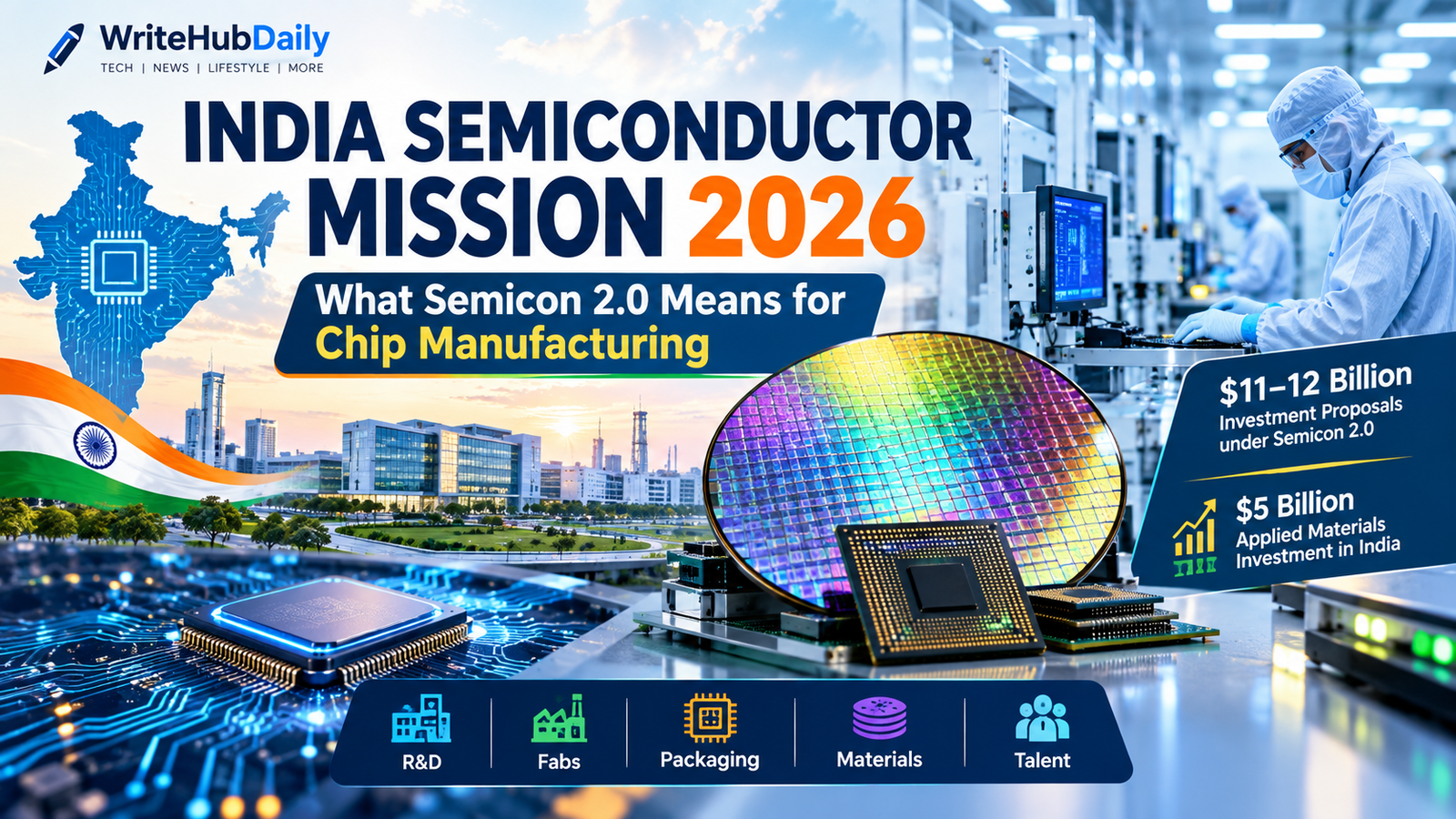
India's semiconductor industry is entering a new phase in 2026. With Semicon 2.0, the country is expanding its focus beyond chip fabrication to include chip design, semiconductor equipment, materials, advanced packaging, research and development, and talent development.
The latest developments at SEMICON India 2026 have also brought fresh investment announcements and proposals from global semiconductor companies. The event is being held from September 17 to 19, 2026, at Yashobhoomi in Delhi under the theme "Silicon to Systems: Building the Ecosystem." :contentReference[oaicite:0]{index=0}
For businesses, technology professionals and consumers, these developments could shape India's role in the global semiconductor supply chain over the coming years.
What Is the India Semiconductor Mission?
The India Semiconductor Mission (ISM) is the country's programme for developing a domestic semiconductor ecosystem. The first phase focused heavily on semiconductor fabrication, assembly, testing and packaging.
In July 2026, the Union Cabinet approved Semicon 2.0 with an outlay of ₹1,27,500 crore. The expanded programme is designed to strengthen areas including chip design, semiconductor equipment and materials, fabrication, advanced packaging, research and development, and talent. :contentReference[oaicite:1]{index=1}
What Is Semicon 2.0?
Semicon 2.0 is the next phase of India's semiconductor programme. Instead of concentrating only on individual manufacturing facilities, the programme aims to develop a broader ecosystem around them.
According to information presented at SEMICON India 2026, the programme has six major areas of focus:
- Chip design
- Semiconductor machines and materials
- Chip fabrication facilities
- Advanced packaging
- Research and development
- Talent development
This wider approach is intended to connect different stages of the semiconductor supply chain rather than treating chip manufacturing as a standalone activity. :contentReference[oaicite:2]{index=2}
India Has Received $11–12 Billion in Semiconductor Investment Proposals
One of the major developments announced during SEMICON India 2026 is that India has received semiconductor investment proposals worth approximately $11–12 billion, or around ₹1 lakh crore.
The proposals cover several parts of the semiconductor supply chain, including equipment, materials, gases, chemicals, substrates and advanced packaging. The investments are expected to come over the next two to three years, subject to the relevant approvals and company decisions. :contentReference[oaicite:3]{index=3}
Some companies have not publicly disclosed their proposed investments yet, so the figure represents investment interest and proposals rather than money already spent.
Applied Materials Announces a $5 Billion India Investment
US semiconductor equipment company Applied Materials announced plans to invest $5 billion in India over the next decade.
The company's India investment plan is expected to support research and development, semiconductor supply-chain expansion and workforce development. Applied Materials also announced plans for an advanced semiconductor research park and an expansion of its India-based supply-chain capacity. :contentReference[oaicite:4]{index=4}
The announcement is significant because semiconductor manufacturing requires more than factories. Equipment suppliers, materials companies, engineers, researchers and specialised service providers are also required to build a complete ecosystem.
What Are the Six Pillars of Semicon 2.0?
1. Chip Design
Chip design is one of the major areas of focus under Semicon 2.0.
The programme aims to help Indian semiconductor design companies and startups scale their operations, access funding and develop increasingly complex chip and system designs.
The semiconductor design ecosystem is particularly important because India already has a large engineering and technology workforce working in chip design and related fields.
2. Semiconductor Machines and Materials
Modern chip manufacturing requires highly specialised machines, chemicals, gases, silicon materials and other components.
Semicon 2.0 is therefore expanding its focus to the suppliers that support semiconductor factories. Building these capabilities locally could help create a more complete domestic supply chain.
3. Semiconductor Fabs
Fabrication plants, commonly called fabs, manufacture semiconductor wafers using highly controlled processes.
India has approved multiple semiconductor projects, but large-scale chip fabrication remains a developing capability. Reuters reported that India had not yet produced chips from a large-scale fabrication facility, while several packaging projects had already entered commercial production. :contentReference[oaicite:5]{index=5}
This makes the development of fabrication capacity one of the most closely watched parts of India's semiconductor strategy.
4. Advanced Packaging
After semiconductor wafers are manufactured, chips need to be packaged before they can be incorporated into electronic products.
Advanced packaging is becoming increasingly important because packaging technologies can influence chip performance, efficiency and the way multiple components are integrated.
Semicon 2.0 includes advanced packaging as a separate area of development alongside traditional manufacturing activities.
5. Research and Development
Semiconductor technology requires continuous research. Improvements in chip architecture, materials, manufacturing processes, packaging and equipment can require years of research and engineering.
Semicon 2.0 includes support for applied research and development involving companies, research organisations and academic institutions. :contentReference[oaicite:6]{index=6}
6. Talent Development
Semiconductor manufacturing requires specialised engineers, technicians, clean-room workers and researchers.
Under the new roadmap, India plans to expand semiconductor training and develop more technicians for semiconductor factories and related facilities. The government has also discussed expanding existing educational programmes from chip design into broader systems design. :contentReference[oaicite:7]{index=7}
What Companies Are Expanding Their Semiconductor Presence in India?
Several global and Indian companies have announced semiconductor-related investments, agreements or expansion plans.
| Company / Organisation | Development |
|---|---|
| Applied Materials | $5 billion investment plan over the next decade, including R&D, supply chain and workforce development. |
| Lam Research | Plans for a silicon-component manufacturing facility and expanded R&D activities in India. |
| Tata Electronics | Multiple agreements covering suppliers, materials, packaging, design and other semiconductor activities. |
| Fujifilm | Plans related to localisation of semiconductor materials. |
| JSR Corporation | Agreement related to photoresists and advanced semiconductor chemicals. |
These developments show that the semiconductor ecosystem includes many businesses beyond chip manufacturers themselves. :contentReference[oaicite:8]{index=8}
What Is Happening With Semiconductor Manufacturing in Gujarat?
Gujarat is one of the key locations in India's semiconductor development plans.
Tata Electronics is developing a major semiconductor fabrication project in Dholera, Gujarat. Alongside the manufacturing project, agreements are also being developed around suppliers and supporting infrastructure.
At SEMICON India 2026, Tata Electronics signed an agreement with Ascendas First Space for a proposed 363-acre vendor park intended to support suppliers around its Dholera semiconductor facility. Agreements involving semiconductor materials and chemicals were also announced. :contentReference[oaicite:9]{index=9}
These supplier developments are important because a semiconductor factory requires a large network of specialised companies around it.
How Could Semicon 2.0 Affect India's Technology Industry?
The impact of Semicon 2.0 could extend beyond semiconductor factories.
A larger semiconductor ecosystem could create opportunities for:
- Chip design companies
- Electronics manufacturers
- Semiconductor equipment suppliers
- Materials and chemical companies
- Testing and packaging businesses
- Engineering and R&D companies
- Technical training organisations
- Technology startups
It could also increase demand for specialised engineering and manufacturing skills.
Will Semicon 2.0 Make India a Major Chip Manufacturer Immediately?
No. Semiconductor manufacturing is a complex, capital-intensive industry and building a complete ecosystem takes time.
India has made progress with approved projects and commercial production in some packaging and assembly facilities, but large-scale fabrication remains under development. Reuters reported that India's first large-scale fabrication capability was still being developed in 2026. :contentReference[oaicite:10]{index=10}
Therefore, the current investment announcements should be viewed as part of a longer-term industrial development process rather than an immediate transformation of India's semiconductor manufacturing capacity.
Why Are Semiconductors Important?
Semiconductors are used in a wide range of products and systems, including:
- Smartphones
- Computers and laptops
- Artificial intelligence systems
- Automobiles and electric vehicles
- Telecommunications equipment
- Industrial machines
- Consumer electronics
- Medical equipment
- Defence and aerospace systems
As demand for computing power and AI infrastructure increases, access to semiconductor manufacturing and supply chains has become increasingly important for technology companies and countries.
What Does Semicon 2.0 Mean for Consumers?
Consumers are unlikely to see an immediate change in smartphone or computer prices simply because of Semicon 2.0.
The potential benefits are longer term. A stronger domestic ecosystem could support electronics manufacturing, technology research, skilled employment and supply-chain development.
However, semiconductor projects require significant investment and time before their full economic and manufacturing effects can be measured.
What Does Semicon 2.0 Mean for Startups?
Semicon 2.0 also places greater emphasis on semiconductor startups and chip design companies.
According to reports from SEMICON India 2026, the programme aims to expand the number of semiconductor design startups and companies participating in the ecosystem. The first phase had more than 100 startups participating in chip-design activities. :contentReference[oaicite:11]{index=11}
This could create opportunities for startups working on chip architecture, embedded systems, AI hardware, electronics design and semiconductor software tools.
India Semiconductor Mission 2026: Key Numbers
| Area | Reported figure / target |
|---|---|
| Semicon 2.0 programme outlay | ₹1,27,500 crore |
| Investment proposals discussed | Approximately $11–12 billion |
| Applied Materials investment plan | $5 billion over 10 years |
| Semiconductor design target | At least 200 startups and companies |
| Technician training target | More than 100,000 technicians over five years |
| SEMICON India 2026 | September 17–19, 2026 |
The figures above come from government statements and reporting around SEMICON India 2026. Investment proposals are not the same as completed investments and may depend on company approvals and project execution. :contentReference[oaicite:12]{index=12}
Frequently Asked Questions
What is India Semiconductor Mission 2026?
India Semiconductor Mission 2026 refers to India's continuing effort to develop a domestic semiconductor ecosystem, including manufacturing, chip design, packaging, materials, equipment, research and talent development.
What is Semicon 2.0?
Semicon 2.0 is the second phase of India's semiconductor programme. It was approved in July 2026 with an outlay of ₹1,27,500 crore and expands support across six major areas of the semiconductor ecosystem. :contentReference[oaicite:13]{index=13}
How much semiconductor investment has India attracted under Semicon 2.0?
Officials reported approximately $11–12 billion in investment proposals and interest under Semicon 2.0. These proposals are expected to develop over the next two to three years, subject to approvals. :contentReference[oaicite:14]{index=14}
What is Applied Materials investing in India?
Applied Materials has announced plans to invest $5 billion over the next decade in India, focusing on areas including research, supply-chain development and workforce expansion. :contentReference[oaicite:15]{index=15}
Is India already manufacturing semiconductor chips?
India has semiconductor packaging and related commercial production facilities, but large-scale chip fabrication remains under development. :contentReference[oaicite:16]{index=16}
Will Semicon 2.0 create jobs?
The semiconductor ecosystem is expected to create demand for engineers, technicians, researchers and other specialised workers. Government officials have discussed training more than 100,000 technicians over five years and expanding semiconductor education programmes. :contentReference[oaicite:17]{index=17}
Final Thoughts
India Semiconductor Mission 2026 is moving into a broader phase with Semicon 2.0. The focus is no longer limited to building individual semiconductor facilities. The programme covers chip design, machines, materials, fabs, advanced packaging, research and talent.
The latest $11–12 billion investment proposals and Applied Materials' $5 billion investment plan add to the semiconductor activity being developed in India. :contentReference[oaicite:18]{index=18}
For India, the next stage will be about turning investment proposals and announced projects into operational facilities, supplier networks, research capabilities and skilled talent.
For technology businesses and professionals, the expanding ecosystem could create new opportunities across semiconductor manufacturing, electronics, chip design, engineering and research.
Sources
- Press Information Bureau – India Building Semiconductor Future
- Press Information Bureau – SEMICON India 2026
- The Indian Express – Semicon 2.0 investment proposals
- Reuters – Applied Materials $5 billion India investment
- SEMICON India 2026 – Official Website
Disclaimer: This article is provided for general informational purposes. Investment proposals, project timelines and company plans may change based on regulatory approvals, board decisions, financing and execution. Readers should verify important information with official company or government sources.